⏱ 7 Minute Read
Last Updated: November 13, 2026
Moving in winter in Tacoma is very doable. You just need to plan for three things the summer movers never think about: wet weather, short days and a heating system that has to work from night one. Use this checklist to cover all three, from booking your date to your first night in the new place.
Why a winter move is worth considering
Most people wait for summer, which is exactly why summer is the busiest and most expensive time to move. In winter you will often find easier scheduling with movers and truck rental companies, and more flexibility with landlords and property managers who would like to fill a home before the new year.
The cost is that you will be working around rain, cold and early sunsets. Around the winter solstice the sun goes down in Tacoma at roughly 4:20 p.m., so your real moving day is shorter than it looks on the calendar. Everything below is built around that.
Aim for a weekday morning if you can. You get the most daylight, the best chance of a dry stretch and room to unpack before dark. Avoid the days right around Thanksgiving, Christmas and New Year's, when movers are booked and offices are closed.
Four weeks before: lock in the basics
Confirm your lease start date and the exact day you will receive keys. Ask what time the home will be ready, because a noon handoff means an afternoon move in the dark.
Book movers or a truck now, especially if your date falls near a holiday. Ask whether the quote changes for rain, extra stairs or a long carry from the driveway, since those are the surprises that raise a bill on the day.
If you are still shopping, browse current Tacoma homes for rent and read the application criteria first, so you know the income, credit and screening requirements before you apply. A winter lease signing can move quickly.
Two weeks before: utilities and address changes
Set up service for your new address before you arrive. In Tacoma, electricity and water are commonly provided by Tacoma Public Utilities, and many homes get natural gas from Puget Sound Energy, but the right provider depends on your exact address, so confirm with your property manager.
Schedule start dates for power, water, gas if your home has it and internet. Internet installers book out further in winter than most people expect, so request an install date early.
Then update your address with the post office, your bank, your employer and anyone who sends you bills. Set up mail forwarding now, not after the first missed statement.
One week before: pack for rain
Rain is the main enemy of a winter move, and a few cheap supplies handle most of it.
- Use plastic bins or heavy-duty boxes for anything you will carry outside, and wrap cardboard boxes of books and papers in plastic.
- Keep a roll of plastic sheeting or a few tarps to cover furniture, mattresses and the truck bed.
- Pack a "first night" box with sheets, towels, toiletries, chargers, a flashlight, a few tools and a kettle or coffee maker, so you can sleep and shower without opening anything else.
- Bring old towels or cardboard to lay down inside the entry, so you protect the floors you will be held responsible for.
Wet cardboard collapses without warning. Boxes with fragile or heavy items should go in plastic bins in winter, or into the truck with a tarp over them.
Moving day: work with the daylight
Start as early as the keys allow, and plan to have the truck unloaded before dusk. Move the heavy furniture and anything that must not get wet first, while you still have the most light.
Keep the front door and any steps clear. Wet steps and wet shoes are the most common cause of a moving-day fall, so lay down mats and take your time on the porch.
Turn the heat on as soon as you arrive. This is also your first chance to confirm that the thermostat responds, the vents blow warm air and the hot water runs. If anything does not work, tell your property manager that day, in writing.
The winter walkthrough: check what rain and cold reveal
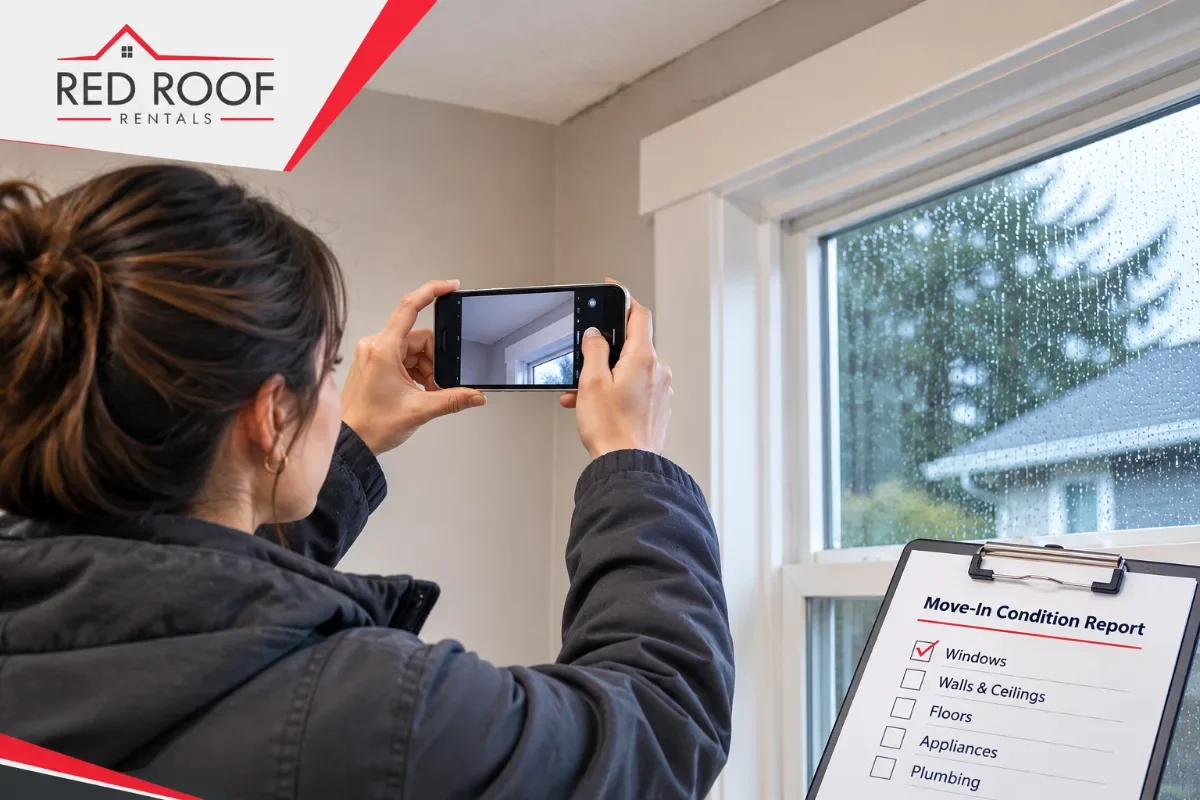
A winter move-in is actually a good time to inspect a home, because the weather shows you problems that stay hidden in July. Walk the property with your phone and look for:
- Water stains on ceilings or around windows, which can point to a roof or flashing leak.
- Gutters and downspouts that are clogged or draining toward the foundation.
- Condensation, dampness or a musty smell in bathrooms, closets and corners.
- Drafty windows and doors, and gaps around the frame.
- Soft spots, discoloration or peeling paint on exterior wood.
Photograph everything, date it and list it on your move-in condition report. Send a copy to your property manager in writing. This record protects you when you move out, and it is the same paperwork that decides how your security deposits are handled later. You can find more help on our Resident Resources page.
Heating, safety and first-week habits
Learn where your thermostat, breaker panel and water shutoff are before you need them. Test the smoke and carbon monoxide alarms, and ask your property manager for the right way to report an after-hours problem.
In a wet climate, keep moisture from building up. Run bathroom fans, open a window for a few minutes on dry days and avoid drying wet laundry indoors without ventilation. A damp home is uncomfortable, and moisture problems should be reported early rather than left to grow.
If you are thinking about a space heater, ask first. Rules vary by home and by lease, and portable heaters should never be left running unattended.
A simple winter move timeline
| When | What to do |
|---|---|
| 4 weeks out | Confirm key date and time, book movers or a truck |
| 2 weeks out | Schedule utilities and internet, set up mail forwarding |
| 1 week out | Buy tarps and bins, pack the first-night box |
| Day before | Check the forecast, confirm movers, charge your phone and flashlight |
| Moving day | Start early, heat on first, photograph the walkthrough |
| First week | Report problems in writing, learn the thermostat and shutoffs |
Ready for a home you can move into this winter?
Red Roof Rentals manages single-family homes across Tacoma and Pierce County. If you are planning a move, our team can walk you through available homes, the application process and what to expect at move-in. Check the Resident FAQs for common questions, or contact us to ask about a specific home.
Frequently Asked Questions
Is it a bad idea to move in winter in Tacoma?
No. Winter is a perfectly workable time to move here, and it can even be easier on your schedule and your budget. The main trade-offs are rain, short days and the holidays, all of which you can plan around.
Is moving in winter cheaper?
Often, yes. Demand for movers and truck rentals is usually lower outside summer, so you may find more open dates and better rates. Prices vary, so get a couple of quotes.
How early should I turn on utilities before a winter move?
Schedule service at least a week before move-in, and confirm that heat, hot water and power are working on the day you get the keys. Do not wait until your first cold night to find out.
What should I do if I find a leak or mold at my walkthrough?
Photograph it, note it on your move-in condition report and send it to your property manager in writing the same day. Raising it at move-in protects you from being blamed for it later.
Can I use a space heater in my rental?
Check your lease and ask your property manager first. Some homes have rules about portable heaters, and they are a common cause of home fires when used carelessly.
Should I move on a weekday or a weekend in winter?
A weekday morning usually works best. You get the most daylight, shorter waits for elevators or help and fewer crowds, and it leaves you time to settle in before dark.